


You have your brand sorted, the logo is ready and the identity is locked in. The next step is a website that does it justice, and for most businesses that means WordPress, which still powers a huge share of the web. The problem is that a great WordPress site rarely builds itself, and the developer you choose makes all the difference.
Where you hire matters as much as who you hire. The channel you pick shapes the cost, the quality and how much of the vetting and management lands on you. A quick gig marketplace and a dedicated managed developer solve very different problems.
Below are the best places to hire a WordPress developer in 2026, starting with the option that most effectively balances quality, cost, and ongoing support.
How We Compared These Options
We weighed the things that decide whether a hire actually works out. Vetting and quality, since a cheap developer who breaks your site is not cheap. Cost and pricing model. WordPress specialization, because general coding skill is not the same as deep WordPress and WooCommerce experience. The management and support layer, meaning how much oversight you have to provide yourself. And best fit for different project types.
Competitor pricing below is approximate and drawn from public 2026 sources, so confirm current rates and fees before you commit.
1. Wing Assistant: Best for a Dedicated, Managed Developer
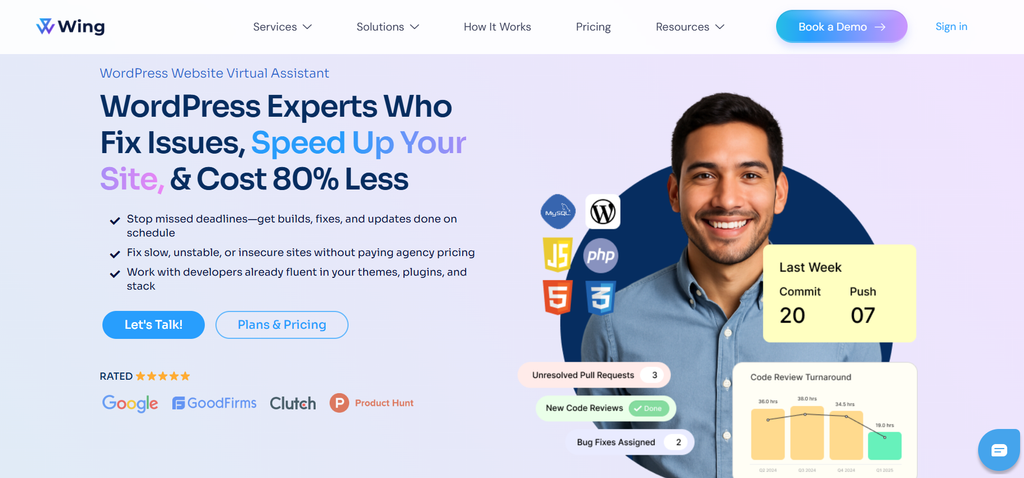
Wing Assistant tops the list for businesses that want an ongoing WordPress developer rather than a one-off freelancer, without paying agency prices. Instead of a gig, you get a dedicated, vetted developer who works inside your stack and is already fluent in your themes and plugins, backed by a full support layer.
The talent is drawn from a large global pool that Wing screens through its own vetting process, and you interview and select the developer before onboarding. The scope covers what most sites actually need, including custom theme and plugin development, responsive mobile-first design, WooCommerce store setup and migration, security and maintenance and performance and speed optimization.
What sets Wing apart is the layer around the developer. You manage work through the Wing Workspace app, and Wing handles payroll, benefits and compliance, so you get the output without the overhead of a direct hire. If a developer is not the right fit, the managed model makes replacement straightforward rather than a restart.
Pricing is transparent and flat. Indicative rates start around $1,199 per month for part-time (80 Hours per month) and $1,599 per month for full-time (160 Hours per month). It is a strong fit for a brand that wants a site built and then kept fast, secure and updated over time.
Best for: businesses that want a dedicated, ongoing WordPress developer with managed support at a predictable, affordable rate.
2. Codeable: Best for Guaranteed-Quality WordPress Projects
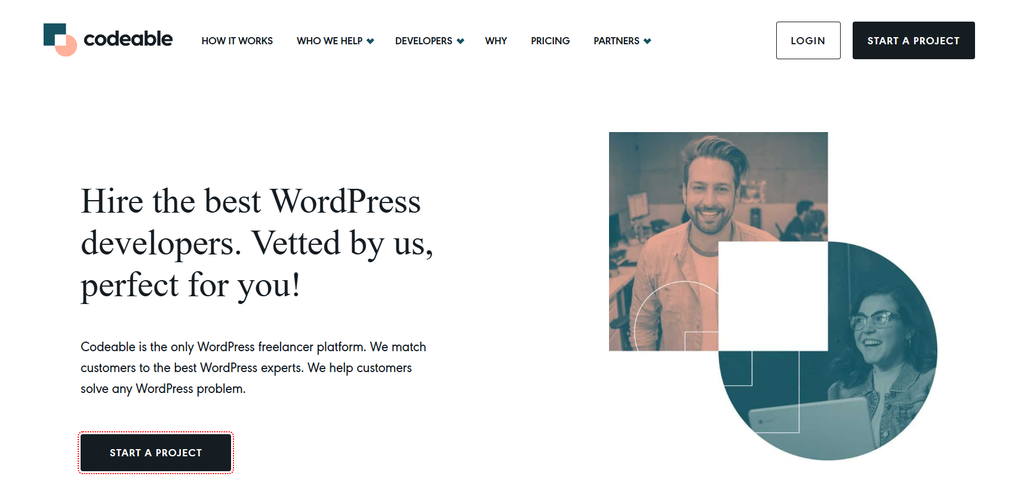
Codeable is the specialist option, focused exclusively on WordPress and WooCommerce. Every developer passes a strict multi-stage screening, with an acceptance rate reported around the top 2 percent, so the quality bar is high.
It works on project-based quotes calculated upfront rather than hourly haggling, which makes budgeting clean. Rates reflect the expertise, with developers commonly cited in the $80 to $120 per hour range, plus a platform service fee of around 17.5 percent. For a critical build where you cannot afford a broken site, that premium buys peace of mind.
Best for: complex or high-stakes WordPress projects where vetted quality matters most.
3. Toptal: Best for Elite, Complex Builds
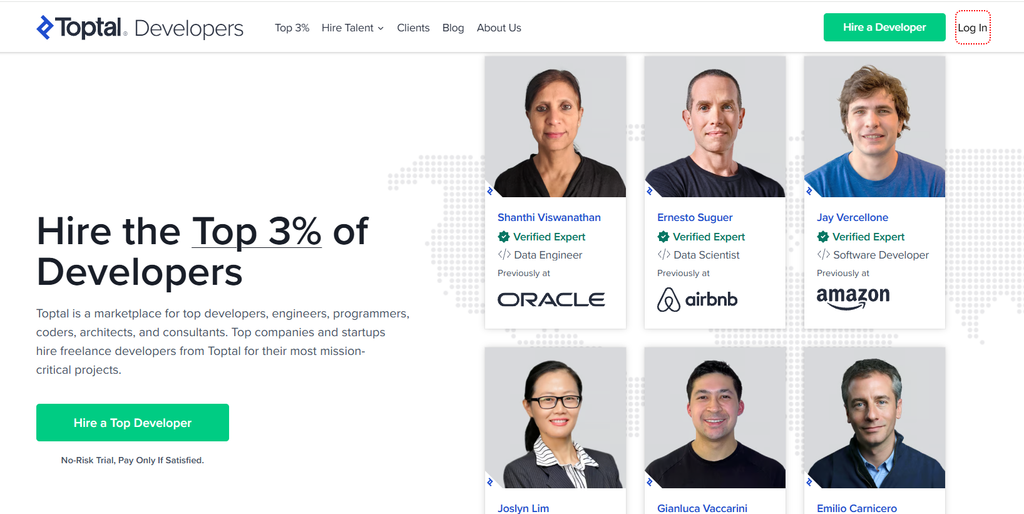
Toptal positions itself as a network of the top 3 percent of freelance talent, screened through a rigorous process. For WordPress work that shades into custom applications or heavy integrations, its developers sit at the senior end of the market.
The hiring process starts with a consultation to scope your needs, and matched developers are pre-vetted, which saves recruitment time. Expect premium rates, commonly cited from roughly $60 to $150 or more per hour depending on seniority, along with the platform’s fee structure. It is aimed at businesses with the budget to match the caliber.
Best for: enterprises and complex projects that need senior, pre-vetted talent fast.
4. Upwork: Best for Flexibility and Range
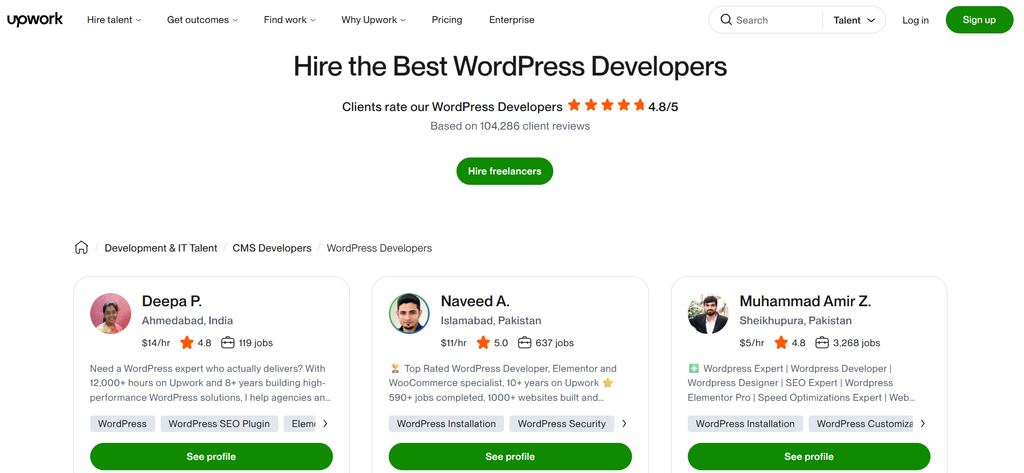
Upwork is the largest general freelance marketplace, and its scale is the draw. Post a WordPress job and you will get a flood of applicants across every budget and skill level, from template tweakers to seasoned engineers.
That range is also the catch, since quality varies widely and you are responsible for all of the vetting yourself. Rates commonly run from about $15 to $150 per hour, with many WordPress developers listed in the $25 to $50 band, and the platform adds client fees on payments. It works best when your task is well defined and you are comfortable screening candidates.
Best for: flexible, well-defined tasks when you are willing to vet freelancers yourself.
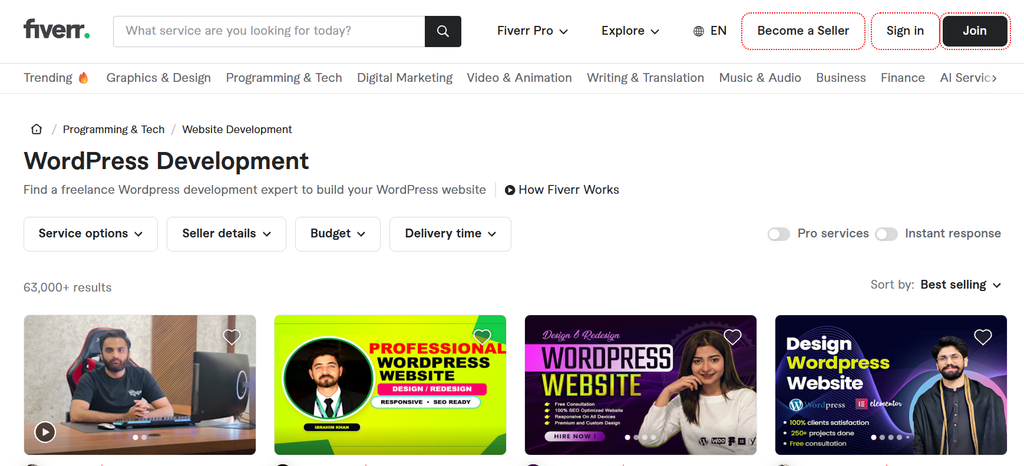
5. Fiverr: Best for Small, One-Off Tasks
Fiverr is the go-to for quick, budget-friendly jobs packaged as gigs. You browse WordPress services by rating and portfolio, pick a package and pay a fixed price, which makes it simple for small, contained tasks like a plugin fix or a landing page.
Pricing is wide, with standard gigs often running from around $50 into the low hundreds and Pro sellers charging more, plus a small buyer service fee. It is not built for complex or ongoing work, but for a single defined task on a tight budget it is hard to beat on speed.
Best for: small, one-off WordPress tasks on a limited budget.
How to Choose the Right One
Start with the shape of the work. A single fix or a simple page fits a gig marketplace like Fiverr, a defined project suits Upwork or a specialist like Codeable, and a complex build calls for elite talent through Toptal. If the need is ongoing, a dedicated managed developer beats repeatedly rehiring freelancers.
Then be honest about vetting. If you cannot evaluate code yourself, lean toward vetted networks or a managed service rather than an open marketplace, since the cheapest hourly rate often costs the most once you factor in rework. And always compare the true cost, including platform fees and your own time, not just the headline rate.
The Bottom Line
There is no single best place to hire a WordPress developer, only the best fit for your project, budget and appetite for management. Marketplaces like Upwork and Fiverr reward those who can define and vet the work, while Codeable and Toptal deliver vetted quality at a premium.
But for a brand that wants a site built well and then kept in good shape over time, Wing Assistant is the strongest starting point, pairing a dedicated, vetted developer with managed support at a price that undercuts the agency route.
