

In these early days of this revival, many people are likely to stumble into specialized stores like Mineshop, unaware that they are entering a world that has actually moved on rather than disappeared.
In the midst of all the European energy conversation, away from all the attention given to the stock market and political talks, a surprising phenomenon is brewing. Bitcoin mining, which was once considered a huge industrial competition with giants like Texas or Inner Mongolia, is making a comeback in Europe, but this time in homes, in garages, in basements, in spare bedrooms, and with a rationale that sounded completely absurd a few years ago.
Talking about Bitcoin mining in a dinner conversation in Berlin or Amsterdam might get you a look that says, “Waste, noisy, bad for the environment.” But talking to enthusiasts, engineers, and even economists might get you a completely different perspective, one that sounds much more logical, with a combination of efficiency, decentralization, and using your domestic energy.
A Shift Born from Pressure, Not Hype
To understand why home Bitcoin mining is making a comeback, you first have to understand why it disappeared in the first place. From 2017 to 2021, Bitcoin mining became an industrial sport, with a higher difficulty level, cheap money, and a need for scale, which favored the big players. But for the average person, the economics no longer added up, or so it seemed.
Europe, in particular, was considered a rather unfavorable place for Bitcoin mining. Energy prices were high, regulations were getting tighter, and concerns about the environment were growing. In Germany and Scandinavia, Bitcoin mining was used as a symbol of excess in political debates.
Pressure drives adaptation.
The machines evolved first. Newer ASIC miners are not the energy hogs of old. They are quieter, more efficient, and some are designed to fit nicely in the home. They produce heat as a side effect, which used to be a problem; now it’s a feature.
At the same time, the European energy infrastructure evolved as well. Dynamic pricing, solar panels, heat pumps, district heating – the lot – changed the equation. For a lot of people, the cost of electricity was no longer just a cost; it was an optimization problem.
Home mining, which used to be irrational, was suddenly just a little unconventional.
Heat: Europe’s Most Expensive Commodity
Europe does not just lack electricity; it has a serious heat problem. From Riga to Milan, people are forced to pay for heat – often for months of the year. The energy crisis of the early 2020s made that painfully clear.
Bitcoin miners produce heat – a side effect that used to be a nuisance. Today, it’s the key to home mining.
A modern small ASIC miner provides a constant source of heat just like a space heater – but with the added benefit of producing Bitcoin as a side effect.
This isn’t theory; it’s happening right now across Northern and Central Europe as miners are plugged in as:
* A space heater in the winter
* A water heater supplement
* A basement or garage climate controller
* A source of heat for the workshop or greenhouse
For people who are already paying high rates for the luxury of having electric heating in the first place, the issue isn’t ideological; it’s practical – if I have to pay for the heat anyway, why not make the best of a bad situation?
Decentralisation, Reconsidered
The original Bitcoin vision was for decentralized money and power. The counter-argument to the rise of the miners was that the decentralized vision was compromised by the concentration of miners. The huge industrial farms seemed to dominate the scene.
Home mining is a different animal.
A single home miner will not influence the markets. However, if there are thousands of home miners, distributed across different countries that have a stable legal system, a robust infrastructure, and a variety of political systems, the Bitcoin system will be more difficult to manipulate or destroy. Europe, for example, is a very over-regulated place. However, Europe is also a very predictable place.
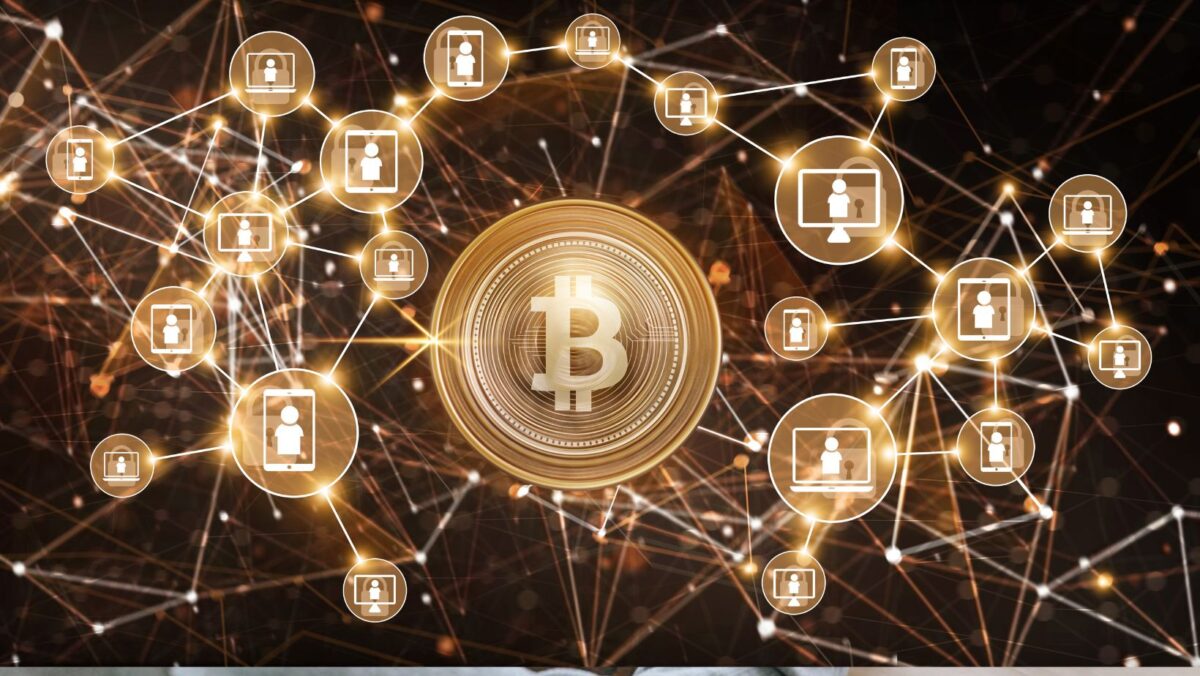
Home miners are not trying to dominate the Bitcoin system. They are simply participating. They are running a node. They are validating the transactions. They are adding their hashpower to the equation without the burden of the debt that the industrial miners have to deal with.
This is a distinction that will not go unnoticed by the policy makers. A decentralized system that is powered by home miners is a very different beast to a decentralized system powered by a few industrial miners.
The Myth of “Unprofitability”
Home miners are not profitable. Or so the theory goes. And from a purely technical standpoint, this is true. However, the detractors of home miners are also very mistaken.
The question of profitability is a complex one. Industrial miners are only interested in making a profit. They are only concerned with the cost per kilowatt hour. Home miners, on the other hand, have a very different approach.
Imagine a household that:
– Already pays for the cost of their electric heating
– Already receives free or very cheap solar power for the day
– Already receives very cheap power for the night
– Already loves the idea of Bitcoin more than the idea of making a profit in fiat currency
Home miners are not a hobby for the person who is paying for their heating. They are a natural part of the energy that they are consuming. The question that the detractors of home miners should be asking is not “Are home miners profitable?” but “Do home miners make the energy that I am consuming more efficient?”
The answer for a lot of people is a resounding yes.
Regulation: Less Hostile Than It Seems
The regulatory reputation of Europe is well-known. However, the majority of European nations don’t ban home Bitcoin mining. Instead, they regulate the usage of electricity, noise levels, and safety. This is the same for any electrical device.
The difference lies in the fact that the rules and regulations regarding the taxation of mined Bitcoin, the usage of electricity, and the safety of the consumer are all very clear. This is no longer the “wild west” of Bitcoin. This is the new normal.
For the home miners of Bitcoin, this is a positive change. This is a guarantee and a comfort. This also ensures that people don’t take reckless gambles. This ensures that people can still participate in the Bitcoin economy.
To put it briefly, home Bitcoin mining in Europe has not been killed. Instead, it has been normalized.

A Cultural Shift, Not a Gold Rush
This is not a gold rush. This is not a promise of instant wealth. This is not a promise of a guaranteed return. This is not a promise of a YouTube thumbnail with the words “passive income.”
Instead, it’s a cultural shift. A shift towards a different mindset. A shift towards a different way of thinking. A shift towards a different way of being.
The biggest difference between the past and the present of home Bitcoin mining in Europe is the fact that the latter is no longer a gold rush. Instead, it’s a movement of engineers working to optimize the usage of the heat generated by the miners. Instead, it’s a movement of people working to save money on their winter bills. Instead, it’s a movement of technologists working to mine Bitcoin for the purpose of the cause.
The Return of the Individual
The return of home Bitcoin mining in Europe is not a strike against the industry. Instead, it’s a reminder that the strongest networks are the ones in which the individual can play a meaningful role.
Industrial-scale Bitcoin mining is not going anywhere. And it shouldn’t. However, the idea that Bitcoin mining is for corporations and corporations only is no longer the only idea. Instead, the idea of the individual being able to play a role in the Bitcoin ecosystem is back.
It’s not loud. It’s not glamorous. But it’s quietly reshaping who helps keep the network running—and why.
And that, maybe, is why home Bitcoin mining is back.
