
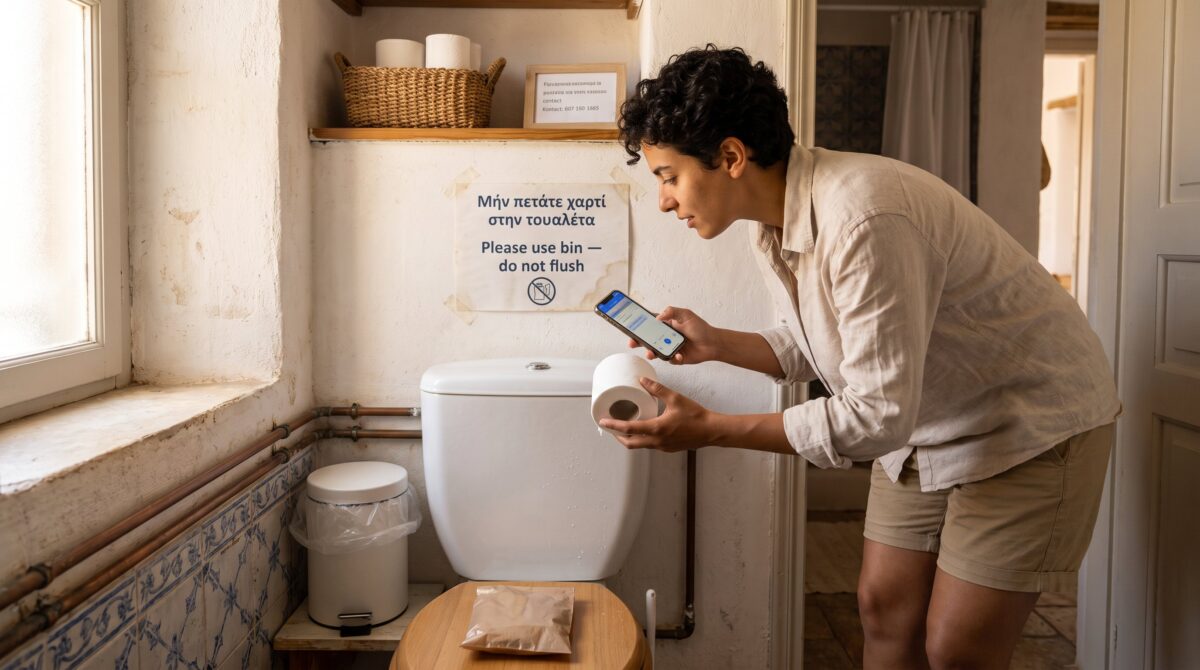

Can you put toilet paper in the toilet in Greece? Short answer: usually no. Travelers should expect many bathrooms, especially in older buildings and on smaller islands, to ask that used toilet paper go into the bin beside the toilet. This article explains why, where flushing is acceptable, practical disposal options, and simple traveler habits that prevent plumbing problems and awkward moments.
Key Takeaways
- In Greece, you usually cannot put toilet paper in the toilet due to older plumbing systems, so always look for a bin next to the toilet.
- Modern hotels and facilities in major cities may allow flushing toilet paper, but it’s essential to check for clear signs or ask staff before doing so.
- Using the bin to dispose of toilet paper prevents plumbing clogs, costly repairs, and maintains hygiene in Greek bathrooms.
- Pack a small travel roll of toilet paper or tissues and learn the phrase “Do not throw paper in the toilet” in Greek to navigate local practices respectfully.
- If a bin is full, inform the staff or use a sealed bag to contain used paper until proper disposal is possible.
- Never flush sanitary wipes or feminine hygiene products as they cause serious clogs; always use the provided bin for these items.
Why Many Greek Bathrooms Advise Against Flushing Toilet Paper
Fact: In most places in Greece, toilet paper is not flushed. Older sewers, narrow pipes, and septic systems make clogs common, so many facilities ask people to use a small bin instead of the toilet.
Why this matters: Greek apartment blocks built decades ago often have pipes that collect paper and solids more easily than modern systems. On islands and in village homes, pipes may run a long distance to a septic tank or municipal main. A single clogged line can shut down multiple apartments: property managers hence instruct visitors to avoid flushing paper.
Concrete examples: Many small guesthouses and tavern restrooms place a lidded bin right next to the toilet. Some city cafés also use this approach during busy seasons when maintenance crews cannot clear every minor blockage immediately. Travelers who assumed they could flush and did so have caused backups that required plumbers and several hours of disruption.
A common rule: “When in doubt, don’t flush.” The safest habit for most travelers is to check for a sign or a bin. If a bin is present, the expectation is clear: put used paper in the bin. Doing so prevents clogs, limits unpleasant repairs, and respects local practice.
Where Flushing Is Acceptable And What To Do If It’s Not
Fact: Flushing toilet paper is acceptable in many newer hotels, modern apartments, and major-city facilities, but only when signs or staff say so.
How to tell: Look for clear signage above the toilet or a placard in the bathroom that says flushing is OK. Modern buildings in Athens, Thessaloniki, and upgraded island resorts often show a small icon or English text that permits flushing. Airports and newer shopping malls usually have plumbing that handles toilet paper.
If there is no sign: Use the bin. If a bin sits beside the toilet, that is the practical instruction. If the bin is overflowing, tell staff so they can empty it: leaving paper on the floor risks hygiene problems and embarrassment.
When unsure, ask. A quick question to reception, “May I flush toilet paper?”, clears doubt. Most staff explain the local rule in seconds and appreciate that guests ask before causing damage. Asking prevents a plumbing callout that can disrupt a whole guesthouse.
Practical note: Even where flushing is allowed, avoid flushing sanitary wipes or paper towels. Those items clog drains faster than standard toilet paper and are frequently prohibited everywhere.
Disposal Options: Bins, Bags, And Public Facilities
Fact: The small, lidded bin beside the toilet is the primary disposal option when flushing is not allowed.
How to use the bin: Place toilet paper directly into the bin if liners are provided. For discretion and hygiene, some travelers use a small opaque bag or a folded tissue to wrap used paper before dropping it in. Public restrooms in busy towns commonly supply lined bins that staff empty each day: smaller guesthouses may empty them less frequently, so sealed small bags help contain odor.
Public facilities and long trips: In train stations, airports, and newer ferry terminals, flushable toilets are common. If using a ferry restroom on a small boat, ask staff, some ferries have holding tanks where even toilet paper can cause problems. When disposing in bins, close the lid. An open bin invites flies and makes cleaning harder for the next guest.
Practical example: A traveler in a small Cyclades guesthouse once left used paper beside the bin because it was already full. The paper ended up on the bathroom floor when the bin was knocked over. The lesson: if a bin is full, inform staff or place used paper in a sealed bag until staff can empty the receptacle.
Traveler Tips: Packing, Language, And Respectful Behavior
Fact: Packing a small travel roll or tissues and learning a short phrase reduces awkward moments and shows respect.
What to pack: Bring a pocket-sized roll of toilet paper or a small pack of tissues for remote islands and old buildings. A roll weighing less than 50 grams fits easily in daypacks. Many travelers report that carrying a spare roll saved them during a crowded taverna visit when the restroom ran low.
Useful phrases: Learn one line in Greek: “Μήν πετάτε χαρτί στην τουαλέτα” (Mín petáte chartí stin toualéta), “Do not throw paper in the toilet.” For simplicity, asking in English, “May I flush paper?” usually works in hotels and tourist businesses.
Respect and hygiene: Use the bin when provided. Don’t assume the plumbing works like at home. If a bathroom lacks a bin, place used paper in a small sealed bag and hand it to staff or dispose of it in an outdoor trash can. Avoid tossing paper into open drains or sinks: that creates blockages and unpleasant smells.
Practical warning: Disposing of feminine hygiene products in the toilet causes major clogs. Always use the bin provided regardless of whether toilet paper is flushable. This small act prevents costly repairs and preserves the facility for the next guest.
Conclusion
Fact: The practical rule for travelers is simple, check signs and when in doubt do not flush toilet paper.
Final insight: Most Greek bathrooms will have a bin because plumbing varies widely across the country. By following local instructions, asking staff when unsure, and packing a small roll or tissues, visitors avoid plumbing problems and show respect. That small effort keeps a vacation on track and prevents an awkward, smelly disruption.
